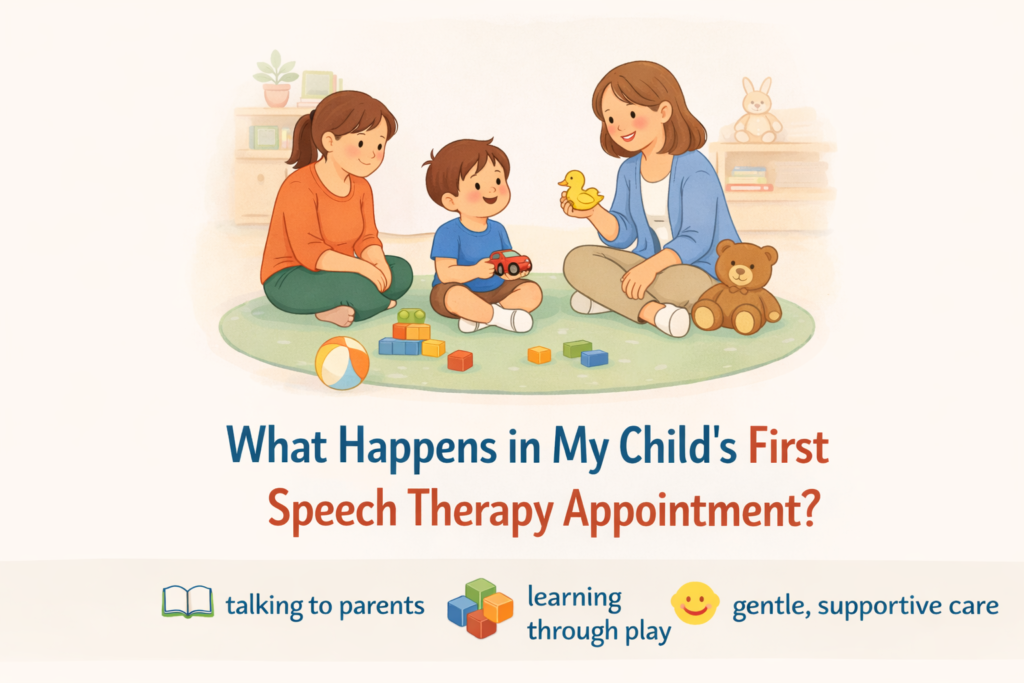
From my interactions with many parents, I have realised that the first appointment with an SLP is a very overwhelming one for them. Most of them recalled it had made them very anxious and nervous.
Understandably so, because there’s this thought inside your head that’s constantly wondering what the appointment is going to be like, will my child cooperate for the assessment, how long will it take, what will be the outcome of the assessment, will it be accurate, how will the outcome change things for my child, etc.
As all the concerns are genuine, I thought I will try to give an overview of what usually happens in the first appointment with the SLP. Hopefully, this can make you more prepared and also ease out some anxiety.
It’s always good to have an idea of what to expect during the first visit and make some preparations so that you can make the most out of your appointment. The first appointment is an opportunity to voice out your concerns and ask questions that you may have.
The first session will be an evaluation session. These sessions have two parts, formal and informal. Most first sessions are relaxed and usually involve listening to parent concerns, collecting information through observations and play, following which a standardised formal test may be performed depending on the child’s age and needs.
The time taken and the assessments involved will also depend on the child’s needs and age. But in general, assessments typically have two parts: informal and formal.
During the informal assessment, the clinician will gather information through parental interview collecting different information about the child. After that the clinician may engage with the child for sometime through play or conversations.

After this a formal assessment of the child using a standardised test may be done depending on the need.

Some tips that will help you and the clinician during the parent interview are:
- Its a good idea to have your concerns listed down, eg: what are your concerns with respect to childs
speech or language or social, litrecy or feeding, etc and also if it is any situation specific, etc., concerns
or observations from school if any, etc - Making a rough note on childs daily routine could be helpful.
- Informations related to birth history(birth weight, birth cry or any significant incidence at the time of birth
or during pregnancy),medical history of the child(if child is under any medications), family history(late
speakers in family, etc), and details regarding different milestones(age at which child attained different
milestones like 1st word, walking, etc ) . - Also prepare the child by making sure he/she is well fed, weell rested and without any fear for the session. Never scare the child and create anxiety or pressure to perform about the session or even during the session.
After the assessment is complete, the SLP will discuss his/her findings with the parent and also discuss the treatment plans, the goals, and the frequency of sessions that may be required, etc. You may also be able to get a printed report of the assessment, which may be used for future references or shared with other professionals or teachers if required.
So to summarise, the first session is a great opportunity for the parent to clear all of your doubts about the child’s concerns, so remember to ask and get clarifications on your doubts. It is also a good idea to share what your immediate concerns are so that the clinician can make a note of it while making the intervention plan and see how she can use it to customise the plan for your child in the future.
But also remember the clinician may need more than one session with the child to get a clear picture of all the aspects, so in most scenarios the clinician may take two to three sessions for evaluation and give you a final report.

The most important thing of all is to go for assessment with an open mind and trust. Remember the SLP is there to help you in identifying and assisting you and your child. He/She is not there to judge you by any means. So be open, be truthful, and do not hold on to any relevant information.
Establishing a good rapport with the therapist will make it easier for the child to also build rapport with the therapist more quickly.
If you consider your speech therapist as your partner who is there to guide and help you and your child to bridge the gap in communication difficulties that he/she is facing, this journey will be much more effective and fruitful, which is the ultimate goal for both the parties involved.